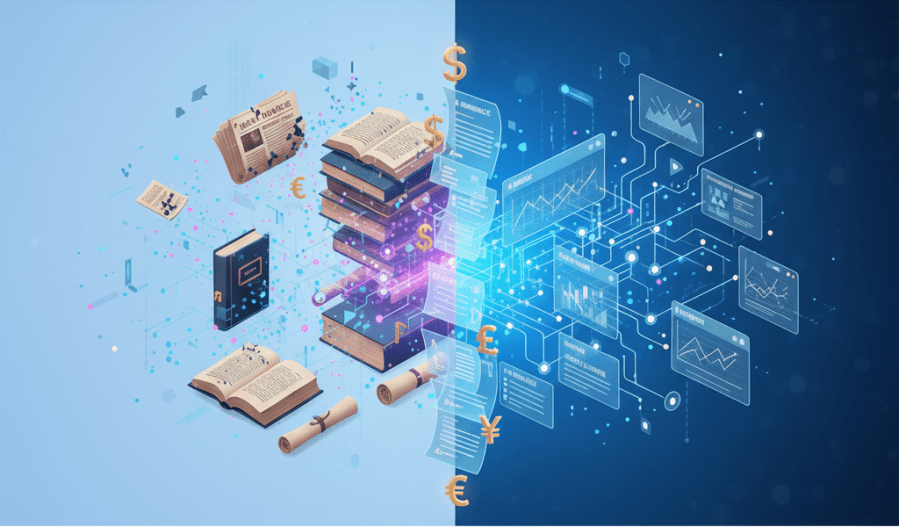
Comprehensive analysis of AI content licensing deals from OpenAI, Google, and Microsoft. Financial terms, the $1.5B Anthropic settlement, and search impact.
- AI Platforms Licensing Deals Cheat Sheet.
- From bilateral deals to licensing marketplaces
- Major content licensing agreements: Financial terms and scope
- The $1.5 billion settlement that changed everything
- How licensing deals shape AI search result rankings
- Publisher resistance and access control
- Traffic and monetization implications
- Content strategy implications
- Market evolution and future outlook
- Conclusion: The licensing landscape ahead
I was wondering about the impact of content licensing deals on presence within AI search, so over a couple weeks I had a number of Deep Research enabled discussions with Claude, and this is what we came up with.
AI Platforms Licensing Deals Cheat Sheet.
OpenAI (ChatGPT)
Major publishers with deals include Associated Press, Politico, Business Insider, Axel Springer (Bild, Welt), Financial Times, Vox Media, Time, Le Monde, Prisa Media, The Guardian, and Schibsted Media (VG, Aftenposten, Aftonbladet, Svenska Dagbladet) DigidayPress Gazette. News Corp signed a 5-year deal worth over $250M AI content licensing deals: Where OpenAI, Microsoft, Google, and others see opportunity – CB Insights Research.
Google (AI Overviews & Gemini)
Around 20 national news outlets in a pilot program, with partnerships tailored to specific products. Also has real-time feed deal with Associated Press Google’s AI Licensing Deal with 20 News Outlets. Over 2,300 titles participate in News Showcase across 22 countries Google’s AI Licensing Deal with 20 News Outlets.
Amazon (Alexa, Shopping Assistant)
New York Times ($20-25M/year), NYT Cooking, The Athletic, Conde Nast, and Hearst for use in Alexa and Rufus shopping assistant Press GazetteTechCrunch.
Perplexity AI
Publishers include Time, Der Spiegel, Fortune, Entrepreneur, The Texas Tribune, Blavity, Gannett, The Independent, Los Angeles Times, CNN, Conde Nast, The Washington Post, Le Monde, and Le Figaro DigidayPress Gazette. Allocated $42.5M for revenue sharing, with 80% going to publishers BloombergDigiday.
ProRata/Gist.AI
Over 500 publications including Financial Times, Axel Springer, The Atlantic, Fortune, McClatchy, and MIT Technology Review News generative AI deals revealed: Who is suing, who is signing?. 50% revenue share model News/Media Alliance Announces AI Licensing Partnership with ProRata | News/Media Alliance.
Anthropic (Claude)
$1.5B settlement with authors for past copyright violations – no formal licensing deals with news publishers announced yet The Washington PostFortune.
Key Takeaway: Publishers are striking these deals for visibility, attribution, and compensation as AI-generated summaries have led to nearly an 80% drop in website clickthroughs A Complete List of Publishers and Their AI Licensing Deals – Futureweek. OpenAI has the most extensive publisher network, while Perplexity offers unique revenue-sharing rather than flat licensing fees.
Can you PR or buy your way into any of these? If so it may be a big win.
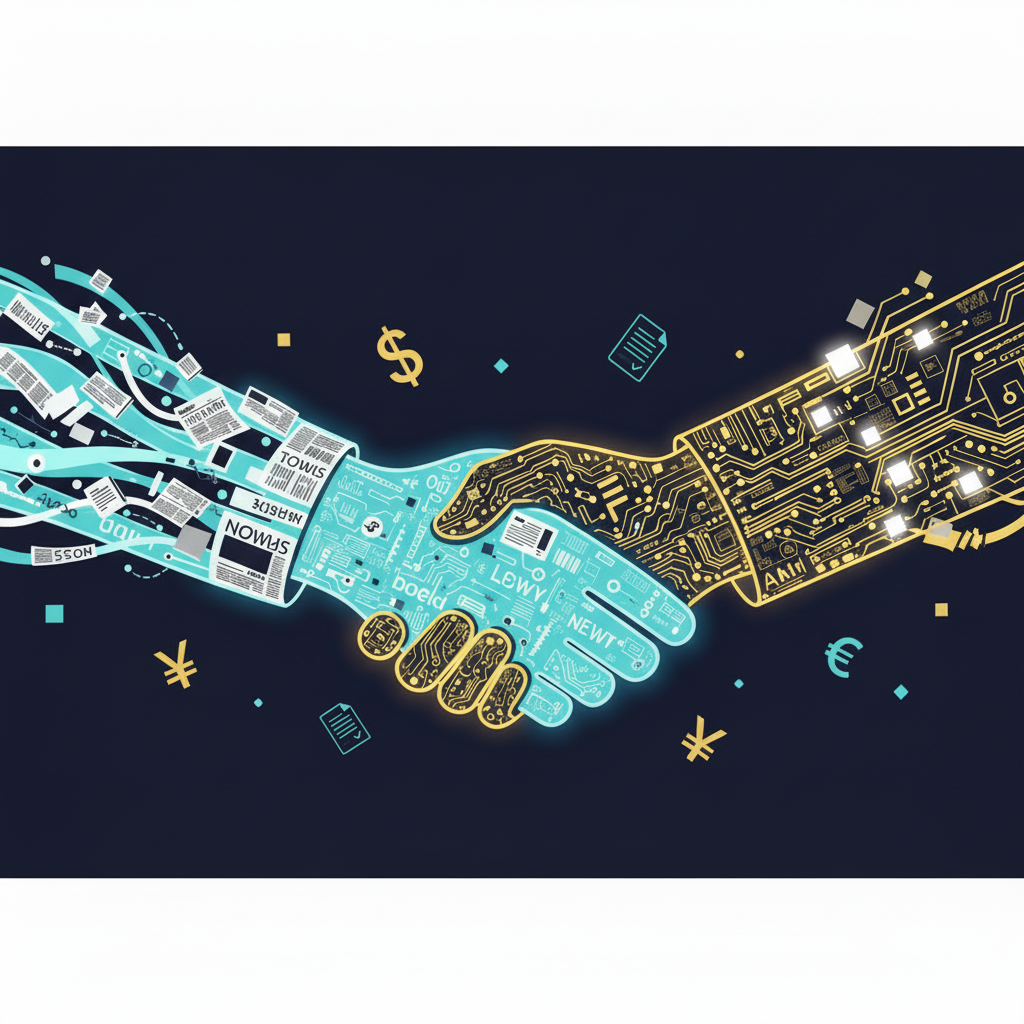
The AI industry’s approach to content licensing underwent a fundamental transformation in September-October 2025, shifting from bilateral deal announcements to systematic licensing infrastructure. After eighteen months of high-profile agreements between AI companies and publishers, the market moved toward marketplace models and collective bargaining frameworks. This evolution occurred against a backdrop of massive copyright liability—Anthropic’s $1.5 billion settlement in September 2025 established the costliest precedent in copyright history—and growing publisher resistance, with 60% of major news sites now blocking AI crawlers despite financial incentives to allow access.
These licensing deals directly determine what content appears in AI search results that now reach 800 million weekly ChatGPT users and process 2.5 billion prompts daily across all platforms. For publishers and content creators, understanding which deals have been struck, their financial terms, and their impact on AI search visibility has become essential as traditional referral traffic declines—93% of AI Mode searches now end without a click to source websites.
From bilateral deals to licensing marketplaces
Real Simple Licensing creates collective bargaining framework
Real Simple Licensing launched September 10, 2025, co-founded by RSS creator Eckart Walther and former Ask.com CEO Doug Leeds. According to TechCrunch, Walther explained the protocol’s purpose: “We need to have machine-readable licensing agreements for the internet. That’s really what RSL solves.”
The protocol enables publishers to embed machine-readable licensing terms directly in robots.txt files, with the RSL Collective serving as a clearinghouse for negotiating terms and distributing payments to member publishers. Initial supporters represent significant web properties: Reddit, Yahoo, Quora, Medium, O’Reilly Media, Ziff Davis (owner of CNET, PCMag, Mashable), Internet Brands (WebMD), People Inc., and The Daily Beast.
Reddit CEO Steve Huffman stated: “The RSL Standard gives publishers and platforms a clear, scalable way to set licensing terms in the AI era. The RSL Collective offers a path to do it together. Reddit supports both as important steps toward protecting the open web and the communities that make it thrive.”
Medium CEO Tony Stubblebine was more direct: “If AI is trained on our writers’ work, then it needs to pay for that work. Right now, AI runs on stolen content. Adopting this RSL Standard is how we force those AI companies to either pay for what they use, stop using it, or shut down.”
RSL offers four pricing models designed to accommodate different publisher needs: pay-per-crawl (compensation for each bot visit), pay-per-inference (fees triggered when AI models reference content in responses), subscription access (flat-rate licensing), and free with attribution. The revenue-sharing model allocates 50% to publishers when their content appears in AI responses.
However, as of early October 2025, no major AI company has committed to honoring RSL. OpenAI, Google, Anthropic, and Meta have not signed on. Leeds told TechCrunch: “Some of the licensing agreements [AI companies] have already done have required them to be able to report on it, so it’s possible. It doesn’t have to be perfect. It just has to be good enough to get people paid.” Industry sources suggest AI companies privately acknowledge “something like this needs to exist,” but without major AI company participation, RSL functions primarily as a collective bargaining signal rather than an enforceable licensing mechanism.
Microsoft’s Publisher Content Marketplace
Microsoft announced its Publisher Content Marketplace on September 23-24, 2025 at an invite-only publisher summit in Monaco, representing the first major tech company to build a two-sided marketplace where publishers can sell content to AI products. According to Axios, one of Microsoft’s slides at the summit read: “You deserve to be paid on the quality of your IP.”
Microsoft’s Copilot serves as the initial AI buyer, with plans to expand to additional partners and develop comprehensive tools, policies, and pricing models. Financial terms remain undisclosed as the pilot program involves a limited set of unnamed publishers. The timing reflects Microsoft’s strategic need to differentiate Copilot, which generates substantially less traffic than ChatGPT according to Similarweb data. Microsoft positions itself as more publisher-friendly than Google, which reportedly pursues exploratory talks with publishers but avoids licensing deals beyond its estimated $60 million annual Reddit agreement.
The Microsoft-Anthropic partnership expanded in September 2025, with Microsoft integrating Claude AI models (Sonnet 4 and Opus 4.1) into Office 365 applications including Word, Excel, Outlook, PowerPoint, and Microsoft 365 Copilot. This marks the first time Microsoft offers direct choice of AI models in its flagship productivity suite. While financial terms weren’t disclosed, the multi-year deal reflects growing friction between Microsoft and OpenAI as the latter pursues infrastructure independence through projects like Stargate.
Traditional content licensing deal announcements were notably sparse in September-October 2025 compared to earlier periods, signaling industry consolidation around systematic frameworks.
Major content licensing agreements: Financial terms and scope
News and media licensing deals
OpenAI-News Corp partnership, announced May 2024, represents one of the largest disclosed media licensing agreements. The Wall Street Journal reported the five-year deal is worth more than $250 million ($50+ million annually), granting OpenAI access to content from Wall Street Journal, Barron’s, MarketWatch, New York Post, The Times (UK), The Sunday Times, The Sun, and dozens of other News Corp properties.
News Corp CEO Robert Thomson stated: “We believe an historic agreement will set new standards for veracity, for virtue and for value in the digital age. We are delighted to have found principled partners in Sam Altman and his trusty, talented team who understand the commercial and social significance of journalists and journalism.”
OpenAI CEO Sam Altman responded: “Our partnership with News Corp is a proud moment for journalism and technology. We greatly value News Corp’s history as a leader in reporting breaking news around the world and are excited to enhance our users’ access to its high-quality reporting.”
Thomson also emphasized in an employee memo: “The pact acknowledges that there is a premium for premium journalism. The digital age has been characterized by the dominance of distributors, often at the expense of creators, and many media companies have been swept away by a remorseless technological tide.”
Additional major media deals include:
OpenAI-Time Magazine (announced May 2024): Access to Time’s 101-year archive. Financial terms undisclosed, but establishes Time as a citation source for historical and contemporary news queries.
OpenAI-Financial Times (announced April 2024): The Wall Street Journal reported the deal is worth $5-10 million annually. Positions FT as an authoritative source for financial queries, with paywall content now accessible for AI training.
OpenAI-Associated Press (announced July 2023): Two-year agreement providing access to AP’s news archive dating to 1985 and continued access to real-time news coverage. Financial terms undisclosed.
OpenAI-Dotdash Meredith (announced May 2024): Later reported to be worth at least $16 million. Licenses content from People, Better Homes and Gardens, Allrecipes, Investopedia, and other properties.
OpenAI-Vox Media (announced May 2024): Access to The Verge, Vox, New York Magazine, and other properties. Terms undisclosed.
Condé Nast-OpenAI (announced August 2024): Multi-year content licensing deal. CEO Roger Lynch wrote in an internal memo: “Over the last decade, news and digital media have faced steep challenges as many technology companies eroded publishers’ ability to monetize content… Our partnership with OpenAI begins to make up for some of that revenue.”
Academic and research publisher licensing
Springer Nature-Google partnership (reported July 2024): Licensed previously published academic papers with a one-time payment of $23 million. This deal established a benchmark valuation for academic content, though questions arose about whether individual researchers whose work was licensed received any compensation.
Wiley licensing agreement (partner undisclosed, reported 2024): Provided $23 million one-time payment for access to academic archives.
Taylor & Francis (Informa) licensing deal (partner undisclosed, reported 2024): Secured $10 million upfront plus recurring payments through 2027. The structure—combining immediate payment with ongoing revenue—represents an evolution from pure one-time licensing fees.
Platform and community content licensing
Reddit-Google licensing agreement, announced February 2024, provides $60 million annual access to Reddit posts and comments for AI training. The deal sparked controversy within Reddit’s community, with users objecting to commercialization of their contributions.
Reddit-OpenAI partnership (announced May 2024) grants ChatGPT access to Reddit’s Data API for real-time, structured content. While financial terms weren’t disclosed, Reddit COO Jen Wong revealed in February 2025 that “AI licensing deals make up about 10% of [Reddit’s] revenue” totaling approximately $130 million annually. With Google paying $60 million, this suggests OpenAI pays approximately $70 million annually to Reddit.
Reddit’s strategic importance stems from WebText2, the dataset created by filtering Reddit posts with high engagement. This dataset receives 5x weighting in GPT training, making Reddit content disproportionately influential in AI model behavior.
Stack Overflow has held discussions with multiple AI companies throughout 2024, with no deals announced. Stack Overflow represents the single most valuable dataset for coding-related queries, containing 58+ million questions and answers spanning every major programming language. Stack Overflow CEO Prashanth Chandrasekar stated in Cloudflare’s announcement: “Community platforms that fuel LLMs should be compensated for their contributions so they can invest back in their communities.”
Entertainment and specialized content licensing
OpenAI-Shutterstock partnership (announced July 2023): Access to Shutterstock’s library of licensed images, videos, and music for DALL-E training. Financial terms undisclosed, but includes compensation to Shutterstock contributors.
Getty Images-NVIDIA partnership (announced September 2023): Licenses Getty’s creative content library for AI training while jointly developing generative AI tools, with maintained editorial control and contributor compensation.
Major entertainment companies (Disney, Warner Bros., Universal) have largely resisted licensing deals, instead pursuing litigation. Warner Bros. Discovery filed suit against Midjourney on September 4, 2025, alleging “systematic, ongoing, and willful” copyright infringement of characters including Superman, Batman, Wonder Woman, and Bugs Bunny, seeking $150,000 per infringed work.
The $1.5 billion settlement that changed everything
On September 5, 2025, Anthropic settled a class-action copyright lawsuit for $1.5 billion—the largest publicly reported copyright recovery in history. Judge William Alsup granted preliminary approval on September 25, after ruling in June that training on legally purchased books constitutes transformative fair use but downloading from pirate sites does not.
The settlement covers approximately 500,000 books that Anthropic allegedly obtained from Library Genesis and Pirate Library Mirror, compensating authors roughly $3,000 per book. Plaintiffs’ attorney Justin Nelson stated: “This landmark settlement is the first of its kind in the AI era. It will provide meaningful compensation for each class work and sets a precedent requiring AI companies to pay copyright owners. This settlement sends a powerful message to AI companies and creators alike that taking copyrighted works from these pirate websites is wrong.”
Anthropic Deputy General Counsel Aparna Sridhar responded: “Today’s settlement, if approved, will resolve the plaintiffs’ remaining legacy claims. We remain committed to developing safe AI systems that help people and organizations extend their capabilities, advance scientific discovery, and solve complex problems.”
The payment schedule extends through 2027: $300 million by October 2, 2025; $450 million by September 25, 2026; $450 million by September 25, 2027; with a $300 million remaining balance. Had the case proceeded to trial scheduled for December 1, 2025, Anthropic faced potential statutory damages of up to $150,000 per work—with plaintiffs estimating total liability exceeding $1 trillion. The company announced a $13 billion funding round on the same day, bringing its valuation to $183 billion.
Implications for content licensing valuations
The settlement establishes a $3,000-per-work baseline for copyright valuation in AI training contexts, providing publishers and authors concrete negotiating leverage. For books specifically, the settlement creates pressure on AI companies to pursue formal licensing rather than risk using pirated sources.
The settlement also distinguishes between legally obtained content (which may constitute fair use) and pirated content (which clearly doesn’t). This creates incentives for AI companies to license directly from copyright holders rather than scraping from gray-market sources. The legal distinction between “we crawled your website” and “we downloaded from LibGen” now carries billion-dollar consequences.
Ongoing copyright litigation
Encyclopedia Britannica and Merriam-Webster sued Perplexity on September 12, 2025 for unlawful copying of reference material, testing whether AI companies can claim fair use when systematically copying comprehensive reference works.
Penske Media Corporation (Rolling Stone publisher) sued Google in late September 2025 over AI Overviews—the first major publisher to sue Google rather than focusing exclusively on OpenAI or Perplexity. This lawsuit shifts copyright liability questions to the search/answer generation phase rather than training phase, potentially establishing that AI systems infringe copyright when they synthesize and display information from licensed sources.
How licensing deals shape AI search result rankings
Citation patterns reveal licensing impact
BrightEdge’s 2025 brand disagreement study analyzed tens of thousands of identical prompts across ChatGPT, Google AI Mode, and AI Overviews, revealing how licensing deals create dramatically different citation patterns. Google AI Overviews surfaced brands in 36.8% of queries versus ChatGPT at only 3.9%, reflecting different content access agreements.
A striking citation paradox emerged: ChatGPT mentions brands 3.2x more than it cites them (2.37 mentions versus 0.73 citations), while Google AI Overviews cites far more than it mentions (14.30 citations versus 6.02 mentions). This suggests ChatGPT synthesizes information from licensed sources without attribution, while Google AI Overviews provides extensive sourcing—likely reflecting different licensing agreement requirements.
Wikipedia and Reddit dominate across all platforms
Wikipedia content appears in 47.9% of ChatGPT’s top citations, according to analysis of 30 million AI citations. Wikimedia Foundation Chief Product Officer Selena Deckelmann confirms: “Every LLM is trained on Wikipedia content, and it is almost always the largest source of training data in their data sets.”
Critically, Wikipedia licensing is free (CC BY-SA 3.0), meaning no payment is required for training use. This creates a competitive advantage for Wikipedia over paid sources: AI systems can cite it freely without complex licensing compliance.
Reddit serves as the top citation source for Perplexity with 46.7% of citations, while Google AI Overviews shows 21% Reddit citations. This reflects both Reddit’s $60 million annual licensing deal with Google and its position as the source for WebText2 training data, which receives 5x weighting in GPT models.
Premium publisher content appears selectively
Analysis of citation sources reveals tier-based access patterns reflecting licensing deals. Top-tier licensed publishers (New York Times, Wall Street Journal, Financial Times) appear frequently in ChatGPT citations for news, finance, and business queries—directly correlating with OpenAI’s disclosed licensing agreements. Mid-tier publishers without deals appear inconsistently or not at all, despite producing high-quality content.
This creates a visibility gap where licensing deals determine not just AI training but AI search results. Publishers without deals effectively become invisible in AI-mediated discovery, regardless of content quality or authority.
Publisher resistance and access control
Widespread crawler blocking despite financial incentives
Publisher crawler blocking reached substantial levels by May 2025: 32% of top 50 US news sites block OpenAI’s search crawler, 40% block OpenAI’s user agent crawler, 50% block OpenAI’s training crawler, 56% block Perplexity, 58% block Google Gemini, and 60% average blocking Anthropic crawlers.
This widespread resistance occurs despite financial incentives to allow access, suggesting deep concerns about the economic model. The progression from search crawlers (32% blocked) to training crawlers (50% blocked) indicates publishers are more willing to allow real-time search than allow content to be incorporated into model training.
Cloudflare enables micropayment infrastructure
Cloudflare launched AI bot blocking by default on July 1, 2025, with all new domains defaulting to blocking AI crawlers. CEO Matthew Prince stated: “If the Internet is going to survive the age of AI, we need to give publishers the control they deserve and build a new economic model that works for everyone—creators, consumers, tomorrow’s AI founders, and the future of the web itself. Original content is what makes the Internet one of the greatest inventions in the last century, and we have to come together to protect it.”
More significantly, Cloudflare launched a “Pay Per Crawl” marketplace in private beta, allowing publishers to set micropayment rates for each page crawl that AI companies can accept, negotiate, or decline. Cloudflare’s June 2025 data revealed stark crawl-to-referral ratios: Google at 14:1, OpenAI at 1,700:1, and Anthropic at 73,000:1.
Publishers supporting the initiative include Condé Nast, TIME, Associated Press, The Atlantic, ADWEEK, Fortune, and Stack Overflow. Dotdash Meredith CEO Neil Vogel stated: “We have long said that AI platforms must fairly compensate publishers and creators to use our content. We can now limit access to our content to those AI partners willing to engage in fair arrangements.”
With 16% of global internet traffic flowing through Cloudflare, this represents significant leverage for publishers seeking compensation. The micropayment model differs fundamentally from traditional licensing deals, potentially generating ongoing revenue streams tied directly to AI usage rather than one-time licensing fees.
LinkedIn’s controversial opt-in-by-default policy
LinkedIn announced on September 18, 2025 that it will share user data with Microsoft and affiliates for AI training, effective November 3, 2025. The policy operates as opt-in by default—users must manually opt out before the effective date, and opting out only prevents future data collection, not retroactive protection.
This represents a different licensing model: rather than LinkedIn licensing archived content to Microsoft (its parent company), the policy enables continuous data collection from active users. The controversy stems from opt-in-by-default structure, which maximizes data collection but minimizes informed consent.
Traffic and monetization implications
The 93% zero-click problem
AI search platforms now process 2.5 billion prompts daily across ChatGPT (800 million weekly users), Perplexity (780 million monthly queries in May 2025), and Google AI features. However, 93% of AI Mode searches end without a click to source websites according to Semrush analysis from September 2025.
This creates fundamental tension: AI platforms reach massive audiences but generate minimal traffic to sources. Publishers cited in AI responses receive attribution but little traffic. The shift from traffic generation to brand awareness requires completely different monetization strategies.
Licensing fees versus lost traffic value
For major publishers, licensing deals offer guaranteed revenue (e.g., News Corp’s $50+ million annually from OpenAI) independent of traffic. However, this must be weighed against traffic value. Mid-sized publishers face worse economics: licensing deals (if available) might pay $1-5 million annually, but a 10-15% traffic decline from AI search cannibalization could cost more through lost advertising revenue.
Small publishers and independent creators generally lack access to licensing deals entirely, making the economics straightforward: AI search means traffic loss without compensation.
Conversion quality advantage
Despite low click-through rates, AI referral traffic converts significantly better: LLM visitors convert 4.4x better than organic search visitors according to Semrush analysis from July 2025. This quality advantage stems from pre-filtering: users who click through from AI responses have already received a detailed answer and specifically want to engage further.
For conversion-focused businesses, the higher conversion rate partially offsets lower traffic volume. However, for advertising-dependent publishers, conversion quality matters less than total impressions and engagement time.
Content strategy implications
Recency bias demands continuous publishing
Seer Interactive’s content recency study (June 2025) analyzing 5,000+ URLs found that 65% of citations were for content published within the past year (2025), 79% from the last two years, and 89% from the last three years. Perplexity showed the strongest recency bias with 50% of citations from 2025 alone.
For publishers, this creates a continuous publishing imperative: content older than 2-3 years faces near-zero citation rates. Evergreen content strategies that worked for traditional SEO must be replaced with regular updates and fresh publishing to maintain AI visibility.
Branded mentions outweigh traditional SEO signals
Ahrefs analyzed 75,000 brands for AI Overview visibility factors, finding the strongest correlation with branded web mentions (0.664 correlation coefficient). Branded search volume showed 0.392 correlation with ChatGPT mentions, while domain rank (0.25) and backlinks (0.10) demonstrated weak correlation.
This suggests AI visibility depends more on how often other sites mention you than traditional SEO factors. Media coverage drives AI visibility more than on-site optimization. Publishers with licensing deals benefit from systematic citation—their content appears regardless of branded mentions.
Platform-specific optimization requirements
The 62% brand disagreement rate across ChatGPT, Google AI Mode, and AI Overviews means brands must optimize for multiple platforms simultaneously. ChatGPT (47.9% Wikipedia citations) requires comprehensive Wikipedia presence, while Perplexity (46.7% Reddit citations) demands active Reddit community engagement.
Market evolution and future outlook
Infrastructure investments dwarf content licensing
OpenAI’s $100 billion commitment to Nvidia for AI chips represents roughly 200 times the annual value of its largest content licensing deal. However, the Anthropic settlement demonstrates that unlicensed content carries existential risk. The $1.5 billion payment—representing 44% of the entire 2025 training data market valuation ($3.4 billion)—shows copyright liability can approach infrastructure costs.
Market consolidation favors large publishers
The emergence of licensing marketplaces benefits large publishers who can participate in collective bargaining. Major deals exclusively involve large publishers: News Corp ($250+ million over 5 years), Reddit ($60-70 million annually), academic publishers ($10-23 million). No deals under $10 million have been publicly disclosed, creating a winner-take-all dynamic.
Synthetic data as licensing alternative
The synthetic data market projects $0.51-0.67 billion in 2025, reaching $2.34-2.67 billion by 2030. Gartner predicts 80% of AI training data will be synthetic by 2028. This trend threatens content licensing economics: if AI companies can generate training data synthetically, they reduce dependence on licensed human-created content. However, industry experts warn of “model collapse” risks, suggesting synthetic data will supplement rather than replace human-created content.
Conclusion: The licensing landscape ahead
The transformation from bilateral deals to marketplace infrastructure signals market maturation, but fundamental tensions remain unresolved. AI companies process 2.5 billion daily prompts reaching 800 million weekly users, yet 93% zero-click rates mean cited publishers receive minimal traffic. Licensing deals provide guaranteed revenue but may not compensate for lost engagement and discovery opportunities.
The Anthropic settlement’s $3,000-per-work benchmark establishes concrete pricing expectations, likely increasing licensing costs while providing publishers stronger negotiating leverage. Whether major AI companies adopt standardized frameworks like RSL or continue selective bilateral agreements will determine if small publishers and independent creators receive any compensation.
For content creators and publishers, visibility in AI search results now depends primarily on formal licensing agreements, community presence (especially Reddit), Wikipedia representation, and continuous fresh content publishing. The next 12-18 months will determine whether licensing marketplaces succeed, whether copyright litigation forces broader compensation, and whether synthetic data undermines content licensing economics entirely.
Sources and Further Reading:
- RSL Standard Official Announcement
- TechCrunch: RSS Co-Creator Launches New Protocol for AI Data Licensing
- Axios: Microsoft AI Marketplace for Publishers
- NPR: Anthropic $1.5 Billion Settlement
- Authors Guild: Anthropic Settlement Updates
- OpenAI-News Corp Partnership Announcement
- Variety: News Corp-OpenAI Deal Details
- Columbia Journalism Review: Reddit’s AI Dominance
- CBS News: Google-Reddit $60M Deal
- Cloudflare: Pay Per Crawl Announcement
- Cloudflare Blog: Introducing Pay Per Crawl
- Digiday: 2024 Publisher-AI Deals Timeline
 Will Scott
Pingback: Startups IA internalisent leurs données: avantage ou coût?
Pingback: Publishers launch AI scorecard to value bot crawls in 2025 – Content Fans